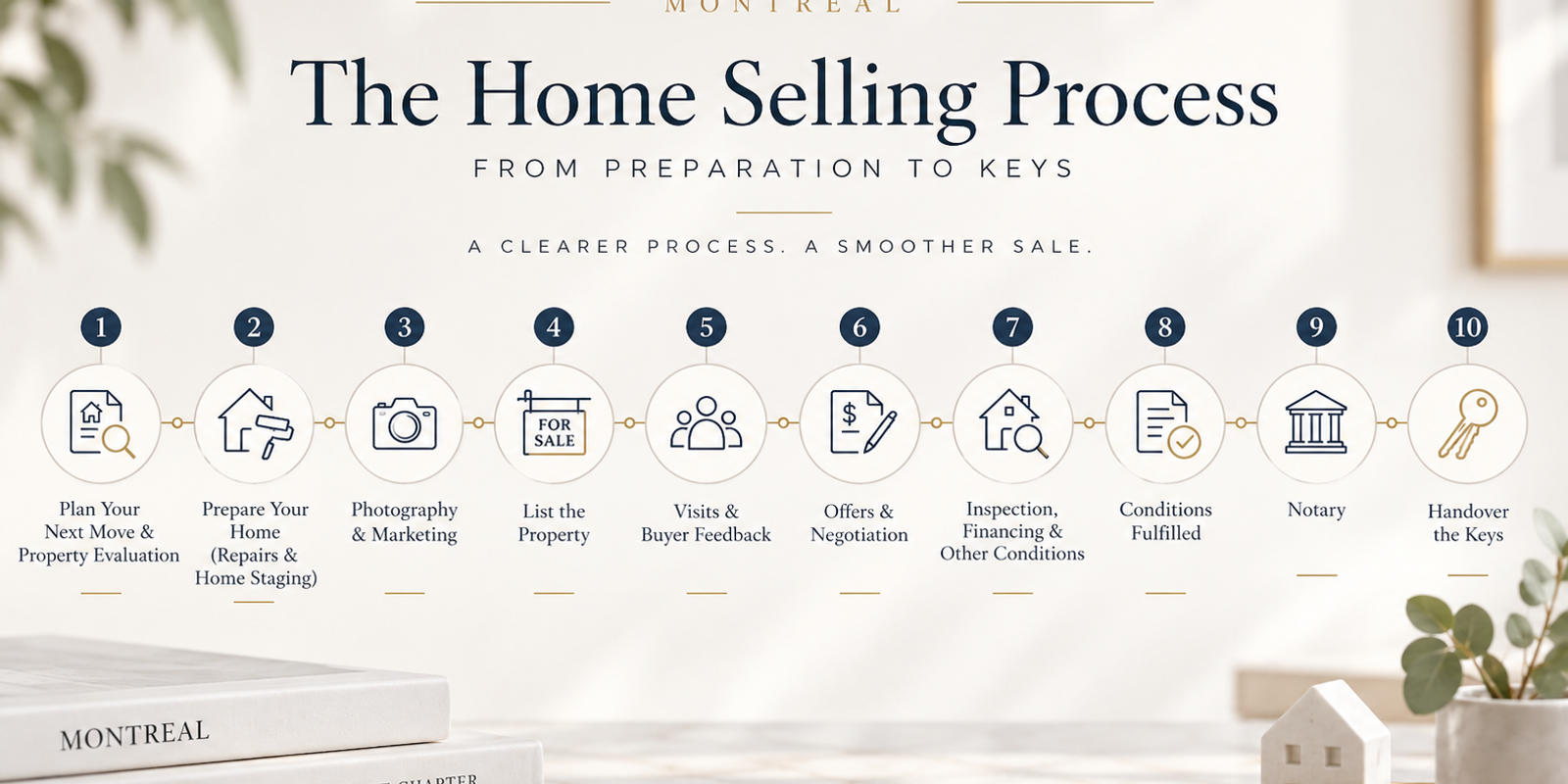
01 | Plan Your Next Move Before You Sell
Before deciding how much your property should sell for, consider what happens after the sale.
Are you moving to another home, or relocating somewhere else?
If you need to buy another property, the timing between your purchase and sale becomes particularly important.
Should You Buy First or Sell First?
There isn't one answer that works for everyone.
Sell first
Selling first gives you certainty about your sale price and how much money you'll have available for your next purchase.
The trade-off is that if you haven't found your next home by the time you sell, you may need temporary accommodation.
Buy first
Buying first gives you more flexibility to wait for the right property.
However, you need to consider whether you can carry both properties if your current home takes longer than expected to sell.
Another possibility is making your purchase conditional on the sale of your existing property. Whether a seller is willing to accept this condition will depend on the market, the property and the other terms of your offer.
If you're buying and selling at the same time, it is important to plan the timing, financing and risks of both transactions together.
02 | What Is Your Property Worth?
A property evaluation shouldn't be based simply on the asking prices of nearby listings.
Start with recent comparable sales and look for properties with similar characteristics, including:
- Location
- Property type
- Size
- Age
- Condition and renovations
- Garage, parking and other important features
A property on the same street isn't necessarily the best comparable.
What Is Your Competition?
Recent sales tell us:
What buyers have recently been willing to pay.
Active listings tell us:
What other options buyers have right now.
Both matter.
It is also useful to look at the average days on market for comparable properties and whether they have generally sold above, around or below asking price.
Market Conditions and Seasonality
Montreal isn't one single real estate market.
Different neighbourhoods and property types can behave very differently at the same time. Some segments of the market may also see more activity during periods such as spring and fall.
The purpose of an evaluation isn't simply to arrive at a number.
It is to understand where your property sits in the current market and how it should be priced and positioned.
03 | What Should You Do Before Listing?
Many homeowners start thinking about renovations as soon as they decide to sell.
Should I repaint?
Should I replace the flooring?
Should I renovate an older kitchen or bathroom?
But spending $20,000 before selling doesn't necessarily mean receiving $20,000 more for the property.
The better question is:
Will this expense make the property more attractive to buyers or meaningfully improve its market value?
Decluttering
Sometimes one of the most effective improvements is simply removing what isn't needed.
Reducing excess furniture and personal belongings can make the property feel more spacious, improve photography and allow buyers to focus on the home itself.
The property doesn't need to look empty.
The goal is to present the home at its best.
Repairs
Before listing, it can also make sense to address small issues that could negatively affect a buyer's first impression.
These might include minor wall damage, deteriorated caulking, loose handles, burnt-out lights or other obvious maintenance items.
But not everything needs to be repaired before selling.
Deciding what is worth doing — and what isn't — is part of the selling strategy.
04 | Home Staging: More Than Making a Home Look Beautiful
Home Staging can help buyers understand how a space works.
Where does the dining table go? How large is the living room with furniture in it? What could an awkward room be used for?
But good Home Staging goes beyond answering practical questions.
A thoughtfully staged home gives buyers the mental space to feel the atmosphere of the property and imagine their own life there.
Where would they have coffee in the morning? Where would friends gather for dinner? Where would they relax at the end of the day?
Once buyers begin imagining their life in a property, they are no longer looking at just an empty space.
Complimentary Home Staging
Complimentary Home Staging is included with selected listings as part of my selling service.
Depending on the property, this can involve rearranging existing furniture, adding selected furniture and accessories, or staging a vacant property.
Not every home needs staging.
Some properties may only need decluttering and a few adjustments. Others may need very little preparation at all.
The preparation should fit the property.
05 | Marketing: Your Buyer's First Visit Is Usually Online
Most buyers will first encounter your property on a phone or computer — not at an open house.
How the property is presented online matters.
Depending on the property and marketing strategy, this can include:
- Professional photography
- Floor plans and 3D virtual tours
- Video
- Virtual staging when appropriate
- Property description and positioning
- Online listing exposure
- Social media marketing
- Open houses
- Private visits
But good marketing isn't simply about beautiful photography.
Pricing, presentation and marketing need to work together.
06 | Prepare Your Documents Before You Receive an Offer
It is useful to organize important property documents before listing rather than waiting until a buyer asks for them.
Depending on the property, these may include:
- Certificate of Location
- Declarations by the Seller
- Previous inspection reports
- Renovation and repair invoices
- Warranties
- Records for major work such as the roof and windows
- Plumbing and electrical work records
- Relevant permits
- Condo documents, if you're selling a condominium
Even if you aren't planning to sell anytime soon, it is worth keeping invoices, warranties and documentation for renovations and major repairs.
Years later, when a buyer asks:
“When was the roof replaced?”
An invoice is much clearer than:
“I think it was around 2018…”
07 | Selling With or Without Legal Warranty
In Quebec, a property can be sold With Legal Warranty or, when agreed between the parties, Without Legal Warranty of Quality, at the Buyer's Risk and Peril.
Selling without legal warranty may reduce certain risks for the seller, but it can also affect buyer interest, offer strategy and price.
And selling without legal warranty does not mean that known problems can simply be withheld from buyers.
The appropriate approach depends on the property, its history and the seller's circumstances.
This is a decision that should ideally be considered before the property goes on the market.
→ Related Guide: Buying a Home in Montreal — What Does “Without Legal Warranty” Mean?
08 | You Received an Offer — Don't Look at Price Alone
Imagine receiving two offers:
Offer A: $805,000
Offer B: $795,000
Should you automatically choose Offer A?
Not necessarily.
In addition to price, compare:
- Financing conditions
- Inspection conditions
- Whether the purchase is conditional on the sale of another property
- Deposit, if applicable
- Inclusions and exclusions
- Notary date
- Occupancy date
- Other conditions
This becomes particularly important when you receive multiple offers.
The highest price isn't necessarily the strongest offer.
Consider the complete terms of each offer and the likelihood that the transaction will successfully close.
09 | Negotiation Is About More Than Price
Negotiation can involve:
Price · Conditions · Inspection · Inclusions · Occupancy · Notary date · Deadlines
Sometimes price is the priority.
Sometimes better conditions are more valuable.
Sometimes the seller needs an occupancy date that coordinates with the purchase of their next home.
And negotiation doesn't necessarily end when an offer is accepted.
For example, if an inspection reveals an issue, the buyer may request a price adjustment, repairs or another solution, leading to further negotiation.
The question isn't simply:
“How much is the buyer offering?”
It is:
“How strong is the offer as a whole?”
10 | What Does It Cost to Sell a Home?
The selling price isn't the same as the amount you will ultimately receive.
Potential selling costs may include:
- Real estate broker remuneration
- Mortgage prepayment penalties, if applicable
- Mortgage discharge or cancellation costs
- Certificate of Location, if an updated one is required
- Repairs and property preparation
- Cleaning and painting
- Moving expenses
- Applicable tax adjustments
- Other property-specific expenses
If the property is not your principal residence, there may also be tax implications.
Non-residents of Canada selling Canadian real estate may also have additional tax and administrative requirements.
11 | Selling With a Broker vs. Selling on Your Own
Homeowners can choose to sell their property without a real estate broker.
The most obvious potential benefit is saving some or all of the brokerage remuneration.
But selling on your own also means taking responsibility for:
Property evaluation and pricing strategy
↓
Preparing the property
↓
Photography and marketing
↓
Buyer inquiries and visits
↓
Offers and counter-proposals
↓
Negotiation
↓
Conditions and deadlines
↓
Transaction follow-up
So the question isn't only:
“How much does a broker charge?”
It is also:
“How much of the selling process do I want to manage myself?”
A broker's role isn't limited to putting a property on Centris.
Property evaluation, preparation, pricing and positioning, marketing, managing visits, analyzing offers, negotiating, and following conditions and deadlines after an accepted offer are all part of the selling process.
Thinking About Selling Your Montreal Property?
You don't need to renovate your home before asking for an evaluation.
Before spending money, it can be useful to understand your property's current market value first and then decide which improvements are actually worthwhile.
My selling service covers the process from property evaluation and preparation to marketing, negotiation and closing.
Selected listings also include Complimentary Home Staging.